Wool guide
A short guide to wool comforters
Wool has been used for bedding for a very long time, and it is easy to see why. Here is what it does, how to pick a weight, and how to keep a wool comforter in good shape.
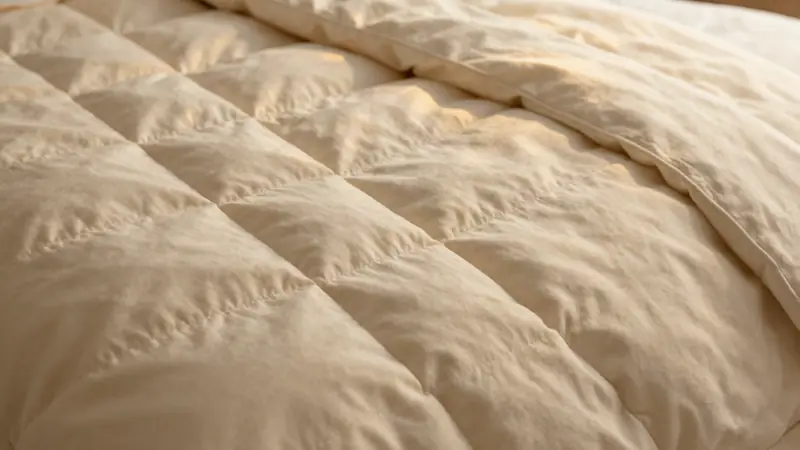
What wool does in a bed
- It holds warmth without much weight. Wool fibers are naturally crimped, which traps small pockets of air between them.
- It breathes. Wool takes up moisture vapor and lets it go again, so the bed is less likely to feel clammy.
- It evens things out. Because it reacts to both warmth and moisture, wool softens the swing between feeling too hot and too cool.
- It springs back. The crimp also gives wool a natural bounce, which helps a comforter keep its loft.
Choosing a weight
There is no single right answer. A few things worth thinking about:
- Your room. A cool bedroom usually wants a fuller comforter. A warm one usually wants a lighter one.
- How you sleep. If you run warm, go lighter. If you are always reaching for another blanket, go fuller.
- Your seasons. Some people keep one comforter all year. Others swap a light one in summer and a fuller one in winter.
- Your bed. Check the size against your mattress, and how much you want it to hang over the sides.
Looking after a wool comforter
These are general habits for wool bedding. The care label on your own comforter always comes first.
- Air it. A few hours outdoors in the shade, or by an open window, freshens wool without washing.
- Shake it out. This keeps the filling spread evenly.
- Spot clean. Treat small marks with a damp cloth and a little mild detergent made for wool.
- Be careful with heat and water. Hot water, harsh detergent and tumble drying can shrink or felt wool. Follow the label before any full wash.
- Store it breathing. Keep it in a cotton bag or a cool, dry cupboard rather than sealed plastic.
Questions about wool that we have not covered? Write to hbetulnursen@gmail.com.